Can Betta Fish Live With Other Fish
You can keep a betta with other fish, but it depends on which species, the tank size, and how you introduce them. Some calm, small fish like certain tetras, rasboras, and bottom-dwelling corydoras often make good companions if you match water conditions and give each fish space.
Watch your betta’s behavior and tank setup closely after adding new fish. If the betta flares, chases, or injures tankmates, separate them quickly and try different companions or a larger tank to reduce stress.
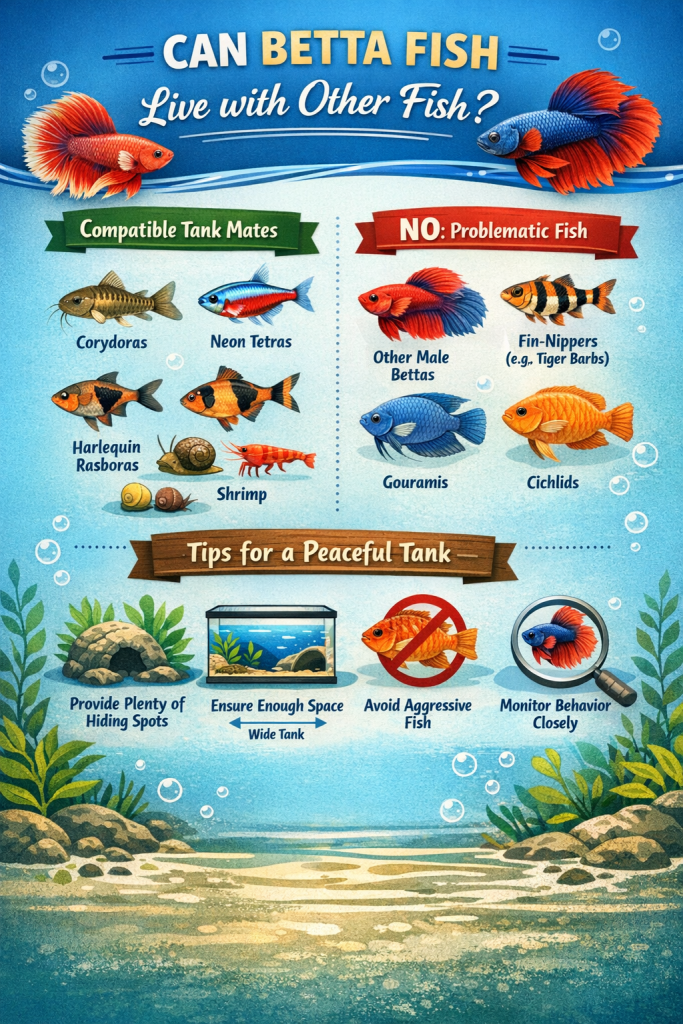
Can Betta Fish Live With Other Fish?
You can keep a betta with other species, but success depends on fish choice, tank size, and careful monitoring. Match peaceful, small fish that occupy different tank zones and provide space and hiding spots.
Compatibility Overview
Bettas can live with certain peaceful fish if you meet space and behavior needs. Choose species that are small, non-aggressive, and not brightly colored or long-finned. Good options include neon tetras, ember tetras, harlequin rasboras, and Corydoras catfish.
Aim for at least a 10-gallon tank for one betta plus a few small tank mates. For a small school (5–8 tetras) or more bottom dwellers, use 20 gallons or larger. Provide plenty of plants, caves, and visual breaks so fish can avoid each other.
Watch for signs of stress: torn fins, hiding, rapid breathing, or chasing. Remove or rehome a tank mate if aggression continues after adjustments.
Factors Influencing Cohabitation
Tank size matters most. A single male betta in a 5-gallon alone is fine, but add mates only in larger tanks—10+ gallons for a couple of companions, 20+ for groups. More water reduces territorial encounters.
Temperament varies by individual betta. Some are calm, others are highly territorial. Introduce tank mates slowly and use a floating divider first if unsure.
Water parameters must match. Bettas prefer 76–82°F and pH around 6.5–7.5. Choose species with similar needs. Keep good filtration and perform regular water changes to lower stress and disease risk.
Common Misconceptions
Bettas are not automatically violent toward all fish. They mainly attack male bettas or fish that look like rivals—bright colors or flowing fins. Avoid male guppies and fancy-tailed species that mimic a betta’s appearance.
“Any small peaceful fish” is not always safe advice. Bottom dwellers like Corydoras usually do well, but some schooling fish need larger groups and space. A lone tetra often becomes stressed.
You cannot rely only on species lists. Monitor interactions, adjust tank layout, and be ready to remove fish. Practical observation beats general rules when keeping a successful community tank.
Suitable Tank Mates for Betta Fish
Choose tank mates that stay small, are peaceful, and occupy different parts of the tank than your betta. Match water parameters, keep tank size at least 10 gallons for a community setup, and watch behavior closely for the first two weeks.
Ideal Fish Species
Pick fast-swimming, non-flashy fishes that won’t nip fins. Good choices include small rasboras (Harlequin, Chili), otocinclus catfish, and pygmy corydoras. These species are peaceful, stay in groups, and typically keep to the midwater or bottom zones.
Keep groups: 6+ rasboras or 4–6 pygmy corydoras to reduce stress. Avoid bright, long fins and aggressive displays. Provide hiding spots and plants so the betta can retreat. Monitor for fin-nipping or chasing and remove fish if the betta shows aggression.
Peaceful Invertebrates
Shrimp and snails often work if your betta tolerates them. Nerite and mystery snails help with algae and usually ignore bettas. Cherry shrimp can thrive but some bettas will eat them, so keep dense plant cover.
Add invertebrates only after your tank is cycled. Use stable water parameters and avoid copper-based medications. Introduce shrimp in groups and watch interactions for several days; remove them if you see repeated hunting behavior.
Fish to Avoid
Avoid fin-nippers, large active swimmers, and flashy males. Species to skip include tiger barbs, tiger danios, most larger tetras (like serpae), and gouramis. These fish either nip fins, outcompete for food, or provoke territorial fights.
Never house two male bettas together or a male with other long-finned males. Also avoid bottom-feeders that grow large (big plecos), since they need more space and can stress your betta. If unsure, test compatibility in a separate quarantine tank first.
Aquarium Conditions for Betta Fish and Companions
Keep water warm and stable, provide hiding places and clear swimming space, and use appropriate filtration and tank size for the number and types of fish you keep.
Tank Size Requirements
A solitary betta needs at least a 5-gallon tank with a lid.
If you plan to add peaceful tank mates, move to a 10-gallon minimum for one betta plus small schooling fish (3–6 neon tetras, for example).
For multiple companions or bottom-dwellers, choose 20 gallons or more to give each species territory and reduce stress.
Consider surface area as well as volume. Bettas breathe from the surface, so a wide tank helps.
Avoid tall, narrow tanks that limit horizontal swimming and make territory conflicts worse.
Use a lid or gentle cover to prevent jumping and keep stable humidity and temperature.
Habitat Setup Tips
Create zones: open swimming space, dense plant cover, and quiet hiding spots.
Use live or silk plants, caves, and driftwood to break line-of-sight and reduce aggression.
Choose smooth decorations and rounded caves to protect long fins.
Place floating plants (e.g., frogbit, floating moss) to give resting spots near the surface.
Keep substrates and décor appropriate for bottom dwellers if you add them—sand or fine gravel for corydoras, for example.
Use gentle lighting and avoid strong currents. Bettas dislike strong flow, so position filter outlets to soften water movement.
Arrange decorations before adding fish so territories form naturally and you can observe interactions from day one.
Water Quality Considerations
Keep temperature steady between 76–82°F (24–28°C).
Use an aquarium heater with a reliable thermometer and check daily during warm or cold weather.
Maintain pH around 6.5–7.5 depending on the companion species.
Test ammonia, nitrite, and nitrate weekly; ammonia and nitrite must read zero, and nitrates should stay under 20–40 ppm.
Perform 20–30% water changes weekly for a 10–20 gallon tank, increasing frequency or volume for smaller tanks or higher bioloads.
Use a filter rated for your tank size and choose one with adjustable flow.
Cycle new tanks fully before adding a betta or its companions to avoid toxic spikes.
Behavioral Signs of Compatibility Issues
You can spot problems by watching how fish act, where they spend time, and how they eat. Early signs let you act fast to protect your betta and tank mates.
Aggression Indicators
Watch for fast, repeated lunges at another fish or flared fins held wide for long stretches. These are clear signs a betta sees a tank mate as a rival. Pay attention when the betta chases one fish around the tank or corners it against decorations; repeated chases usually mean the pairing won’t work.
Look for nipped fins, torn tails, or missing scales on other fish. Damage that appears after short interactions often comes from the betta. Also note if the betta locks eyes or swims in an S-shaped strike pose—this means it may attack soon.
Use a checklist to track incidents:
- Number of chases per hour
- Visible wounds on tank mates
- How long the betta displays flared fins
If your checklist shows frequent incidents, separate the fish or increase hiding spots.
Stress Symptoms
Stress shows in behavior and body signs. Fish that hide constantly, stop eating, or hover near the surface are likely stressed. Your betta may also sit lethargic on plants or the substrate, breathe rapidly, or lose color.
Look for changes in normal routines. Skipping meals, reduced activity, and rubbing against tank objects can point to chronic stress. Stressed fish get sick more easily; watch for cloudy eyes, clamped fins, or frayed tails that won’t heal.
Measure water and observe together. Poor water quality raises stress, but sudden behavior changes with good water often mean social tension. Record feeding response and activity each day to spot trends.
Prevention Strategies
Create separate zones in the tank with plants, caves, and tall decoration so each fish can claim space. Add floating plants and dense mid-level cover to reduce line-of-sight aggression. Provide at least 10–20 gallons for a community with a betta, depending on species and number of fish.
Match tank mates by size and temperament. Choose small, fast, schooling fish like neon tetras or hardy bottom dwellers and avoid other long-finned or brightly colored fish that look like rivals. Quarantine new fish for two weeks to check for disease and reduce stress from sudden introductions.
Have a contingency plan: a spare tank or strong divider lets you separate fish quickly. Monitor interactions for the first 48–72 hours after introduction and keep a log of aggression and feeding to guide decisions.
Long-Term Care and Monitoring
You need steady feeding routines, daily checks for behavior and health, and plans to change tank mates if problems start. Keep records of feeding, water tests, and any signs of stress so you can act quickly.
Feeding in a Community Tank
Feed small, frequent portions so each species gets enough without fouling the water. Offer sinking pellets for bottom dwellers and floating pellets or flakes for mid-to-top swimmers. Watch meals last no more than two minutes; remove uneaten food promptly.
Use a feeding chart:
- Morning: 1/4 to 1/2 teaspoon pellets or 2–3 pellets per medium fish
- Evening: 1–2 frozen or live treats twice weekly (daphnia, bloodworms)
Adjust amounts by fish size and appetite. Bettas need protein-rich pellets; avoid generic flakes as the only food.
Feed betta separately if other fish steal food. Target feeding with a turkey baster or feeding ring can help. Keep a log of amounts and types to spot appetite changes that may signal stress or illness.
Routine Observation
Check the tank daily for behavior, breathing, and color changes. Look for clamped fins, lethargy, flashing against decorations, or hiding more than usual. Note any fin nipping, chasing, or signs of bullying.
Test water weekly for ammonia, nitrite, nitrate, and temperature. Keep ammonia and nitrite at 0 ppm and nitrate under 20–40 ppm. Record readings and maintenance: water changes, filter cleaning, and heater checks.
Inspect plants and decorations for damage and algae. Photograph fish weekly to track growth or injury. If you see illness or persistent aggression, isolate the affected fish in a quarantine tank before conditions worsen.
Adjusting Tank Mates Over Time
Plan to remove or rehome fish that repeatedly stress the betta or show chronic disease. Start by rearranging plants and adding visual barriers to break sight lines. If aggression continues after 1–2 weeks, move the aggressor.
When adding new fish, quarantine them for 2 weeks and introduce during low-light hours. Add peaceful, fast-swimming species that occupy different tank levels, and avoid brightly colored or long-tailed fish that can trigger the betta.
Replace tank mates gradually and keep detailed notes on compatibility. Always ensure tank size and filtration meet the added bioload before making changes.
| Fish Type | Compatibility | Notes |
|---|---|---|
| Corydoras | ✅ Compatible | Peaceful bottom dwellers, avoid Betta territory |
| Neon Tetras | ✅ Compatible | Fast and small, usually ignored by Bettas |
| Harlequin Rasboras | ✅ Compatible | Non-aggressive and schooling fish |
| Snails | ✅ Compatible | Good tank cleaners, rarely provoke Bettas |
| Shrimp | ✅ Compatible (with caution) | May be eaten if small or not hidden |
| Other Male Bettas | ❌ Not Compatible | Highly territorial, will fight |
| Fin-Nippers (e.g., Tiger Barbs) | ❌ Not Compatible | Will damage Betta fins |
| Gouramis | ❌ Not Compatible | Similar behavior, may provoke aggression |
| Cichlids | ❌ Not Compatible | Too aggressive and territorial |
Betta fish can be territorial, but with proper care and the right tank mates, they can live peacefully and thrive.
If you’re curious about how long Betta fish typically live and what affects their lifespan, check out our full guide here.