How Long Do Betta Fish Live
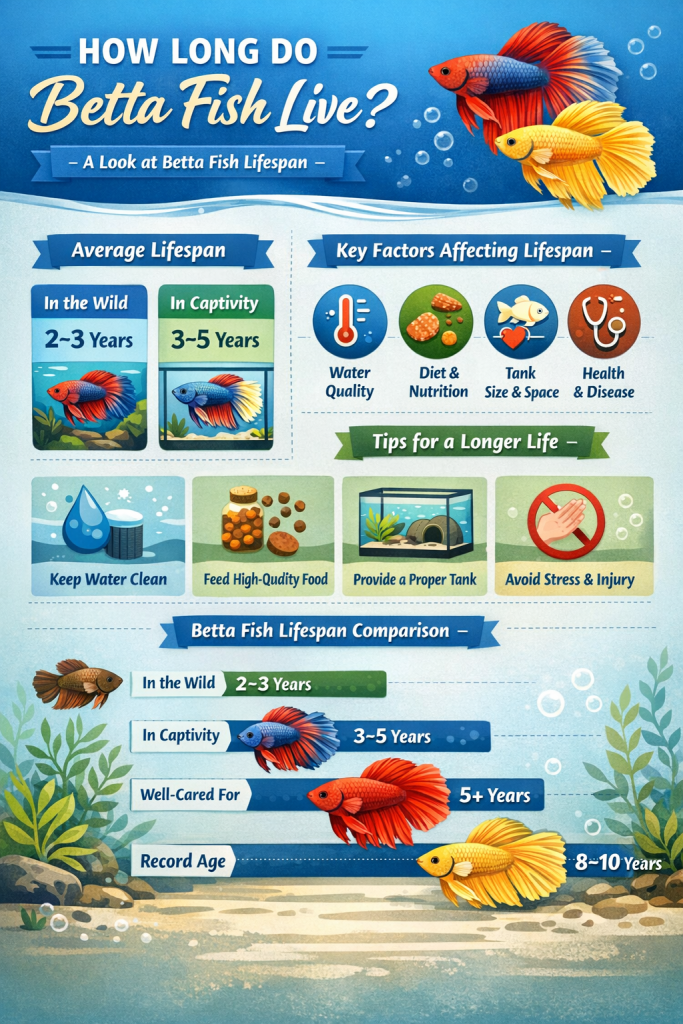
Betta fish lifespan. You can expect a healthy betta to live about 3–5 years in captivity, and with exceptional care some reach 5–7 years. Provide stable warm water, a balanced diet, and a clean tank, and you’ll give your betta the best chance to reach the upper end of that range.
If you want to stretch those years into a long, healthy life, this article walks through what affects lifespan—tank setup, water quality, nutrition, genetics, and common health problems—so you can spot risks and act early. Keep reading to learn simple, practical steps that make a real difference for your betta’s longevity.
| Environment | Average Lifespan | Notes |
|---|---|---|
| In the Wild | 2–3 Years | Exposed to predators and unstable water conditions |
| In Captivity | 3–5 Years | Safer and more controlled, depends on care quality |
| Optimal Care | 5+ Years | Clean water, high-quality food, and enough space |
| Record Age | 8–10 Years | Rare cases with exceptional care |
Average Betta Fish Lifespan
Betta fish lifespans depend mainly on genetics, water conditions, diet, and stress. You can expect differences between captive and wild fish and should track growth stages to spot health issues early.
Typical Lifespan in Captivity
Most captive bettas live between 2 and 5 years. Many sources and hobbyist data report a common range of 2–4 years for average-kept bettas; with optimal care you can often reach 4–5 years.
To maximize lifespan, keep water temperature at 78–80°F (25–27°C), perform regular partial water changes (25% weekly), and use a properly sized, filtered tank (5+ gallons recommended).
Feed a varied diet of high-quality pellets, occasional frozen or live foods (brine shrimp, daphnia), and avoid overfeeding—one to two small feedings per day.
Prevent chronic stress by housing males alone, providing hiding places, and maintaining stable water chemistry (ammonia/nitrite 0 ppm, nitrate <20 ppm).
Betta Fish Lifespan in the Wild
Wild Betta splendens often live shorter lives than well-cared-for captive fish due to predation, food scarcity, and environmental fluctuations.
Typical wild lifespans commonly fall around 2–3 years, though exact figures vary by habitat and local threats.
Natural environments expose fish to parasites, temperature swings, and competition, which increase mortality in juvenile and adult stages.
Conservation status and local ecosystem pressures also influence lifespan; some wild populations may experience reduced longevity where habitats are degraded.
Life Cycle Stages
- Egg: Eggs hatch within 24–48 hours; survival depends on water quality and parental behavior.
- Fry (0–2 months): Fry are fragile; you must provide infusoria or finely crushed feed, frequent small meals, and pristine water.
- Juvenile (2–6 months): Growth accelerates; maintain a consistent diet and monitor for signs of illness.
- Adult (6 months+): Sexual maturity by ~4–6 months; adults require stable conditions to prevent stress-related decline.
- Seniors (2–5+ years): Aging bettas may show reduced activity, fin wear, and increased disease risk; proactive care and veterinary attention can extend quality of life.
Key actions per stage: controlled feeding, frequent water checks, and appropriate tank setup to reduce mortality at each phase.
Factors Influencing Betta Fish Longevity
Good care, stable water parameters, a nutrient-rich diet, and selective breeding quality directly affect how long your betta will live. Attention to tank size, temperature, feeding amounts, and the source of the fish produces the biggest gains in lifespan.
Water Quality and Tank Conditions
- Keep water temperature between 78–80°F (25.5–27°C). Bettas are tropical and rely on stable warmth; use an adjustable heater and a thermometer to prevent daily swings.
- Maintain ammonia and nitrite at 0 ppm and nitrate below 20–40 ppm. Perform 20–30% weekly water changes in a cycled tank, and test water at least weekly with a reliable kit.
- Choose an appropriately sized, filtered tank—5 gallons or larger reduces stress and toxin build-up. Use a gentle filter or low-flow setting because strong currents exhaust bettas. Provide hiding spots and live or silk plants to reduce stress and encourage natural behavior.
- Avoid unconditioned tap water; always treat for chlorine, chloramine, and heavy metals. Monitor pH and hardness; most bettas prefer pH 6.5–7.5 and moderate hardness, but stability matters more than exact numbers.
Diet and Nutrition
Feed a varied, high-protein diet centered on quality betta pellets or flakes formulated for carnivores. Look for ingredients like fish meal, shrimp, or krill near the top of the list.
Supplement with frozen or live foods—brine shrimp, daphnia, and bloodworms—two to three times weekly to provide enrichment and variable nutrients. Avoid feeding feeder goldfish or unapproved wild-caught prey that can introduce parasites.
Follow portion control: feed 2–3 pellets once or twice daily, or an amount your betta consumes within 2 minutes. Fast one day per week or reduce portions occasionally to prevent constipation and obesity.
Remove uneaten food after five minutes to prevent ammonia spikes. Watch for bloating, faded color, or loss of appetite as signs of poor diet or illness and adjust feeding accordingly.
Genetics and Breeding
Source your betta from reputable breeders or sellers who prioritize health and not just color or extreme finnage. Line-bred show bettas often carry genes that predispose them to fin rot, swim bladder issues, or reduced hardiness.
Avoid purchasing from overcrowded, low-care sellers; fish raised in poor conditions accumulate developmental problems that shorten lifespan. Ask breeders about parent health, age, and any history of deformities or disease.
Understand that some strains—long-finned varieties—may require extra care because fins tear or harbor infection. If longevity is your priority, consider shorter-finned or wild-type strains, which generally tolerate suboptimal conditions better.
Extending Your Betta Fish’s Life
Maintain stable, clean water, a properly sized tank with hiding spots, and a varied, measured diet. Watch for signs of illness early and act quickly to treat infections, parasites, or poor water conditions.
Optimal Tank Setup
Provide at least a 5-gallon filtered tank; 10 gallons is better for more stable parameters. Use a gentle filter or baffle it to avoid strong currents that stress bettas.
Keep water temperature at 76–80°F (24–27°C) with a reliable heater and a thermometer you check daily. Perform 25–50% water changes weekly depending on bioload, using dechlorinated water matched to tank temperature and pH.
Add live or silk plants and smooth hiding spots so your betta can rest and avoid sharp edges that tear fins. Monitor ammonia and nitrite at zero and nitrate below 20 ppm with regular test kits.
Healthy Feeding Practices
- Feed high-quality betta pellets as the staple—1–3 pellets twice daily for most adults. Use pellets formulated for Betta splendens; avoid generic flakes that lack necessary protein.
- Supplement 1–2 times per week with frozen or freeze-dried bloodworms, daphnia, or brine shrimp for variety and extra nutrients. Thaw and rinse frozen foods before feeding to remove preservatives and excess water.
- Avoid overfeeding: remove uneaten food after 2 minutes and fast one day per week to reduce the risk of constipation and fatty liver disease. Track portion size and observe body shape to adjust amounts.
Preventing Common Health Issues
Quarantine new fish and plants for 2 weeks to prevent introducing parasites or bacteria. Use a separate hospital tank and test treatments there instead of the main tank.
Watch for symptoms: clamped fins, lethargy, white spots, frayed fins, bloating, or rapid gill movement. On first signs, test water and correct ammonia/nitrite/pH issues before medicating.
Keep a basic first-aid kit: aquarium salt, a broad-spectrum antibacterial/antifungal medication, and a parasiticide appropriate for freshwater. Follow dosing instructions carefully and perform partial water changes during treatment to reduce stress.
Signs of Aging in Betta Fish
You’ll notice changes in appearance and behavior as your betta ages. Pay attention to color, fins, activity, and appetite to distinguish normal aging from treatable illness.
Physical Changes
Fading color is common; scales and fins often lose vibrancy and appear duller than during peak health. Fin edges can become ragged or thin from years of minor tears and reduced regenerative ability. Look for cloudy eyes or a slight build-up on the body that wasn’t there before—these can be age-related, though they also warrant monitoring for infection.
Body shape may change: older bettas sometimes develop a thicker or slightly sunken belly compared with their adult profile. Swim bladder issues can cause unstable buoyancy, so note persistent floating or sinking. Track these physical changes over weeks so you can tell gradual aging from sudden disease.
Behavioral Indicators
Activity level typically declines; your betta will patrol the tank less and prefer resting on leaves or decorations for longer periods. Reaction time slows—expect delayed responses when you approach the tank or offer food.
Appetite often decreases. If your betta eats small portions or skips meals intermittently, adjust feeding amounts but watch for rapid weight loss. Sleep patterns shift too: older bettas may sleep more during the day and remain less curious about enrichment. Increased hiding or reduced interest in flaring can signal discomfort or fatigue rather than aggression changes.
Common Causes of Early Death
Poor water parameters, unstable temperatures, and aggressive or crowded tankmates are the top drivers of premature loss. Fixing filtration, feeding, and tank size issues prevents most of these problems.
Improper Tank Maintenance
Dirty or untreated water rapidly damages gills and immune function. Test ammonia, nitrite, and nitrate weekly; ammonia and nitrite must read 0 ppm and nitrate stay under 20–40 ppm. Perform 25–50% water changes weekly for 5–10 gallon setups, more often if readings rise.
Avoid using untreated tap water. Dechlorinate with a water conditioner and, if your tap has heavy metals, use a remover or aged water. Clean filter media in tank water only to preserve beneficial bacteria. Vacuum substrate to remove uneaten food and waste, and replace one-third of filter media annually or as manufacturer advises.
Watch for cloudiness, strong odor, or gasping at the surface—these are immediate red flags. Replace equipment that fails (heaters, filters) rather than delaying, since sudden equipment failure often leads to rapid declines.
Stress and Overcrowding
Stress weakens immunity and shortens lifespan. Keep a single betta in a tank under 10 gallons only if you provide ample hiding spots and stable conditions; otherwise opt for 5–10+ gallons as a minimum. Avoid housing male bettas with other males or fin-nipping species.
Manage environmental stressors: keep temperature between 76–82°F with a reliable heater and minimize loud vibrations near the tank. Feed a varied, measured diet once or twice daily—remove uneaten pellets after 2 minutes to prevent water fouling. Introduce new tankmates gradually and quarantine new fish for 2 weeks to reduce disease transmission.
More article about betta fish, go to carkade.com.