Where Do Betta Fish Live in the Wild
You’ll find wild betta fish in shallow, slow-moving waters across parts of Southeast Asia — mainly in Thailand, Cambodia, Laos, and Malaysia. They live in rice paddies, flooded fields, streams, and canals where water is warm, low in oxygen, and filled with plants and hiding spots.
You’ll learn how their regions, water conditions, and special breathing organs shape their survival and why those habitats face growing threats. This article will guide your understanding of where wild bettas come from and what that means for keeping or protecting them.
Natural Habitats of Betta Fish
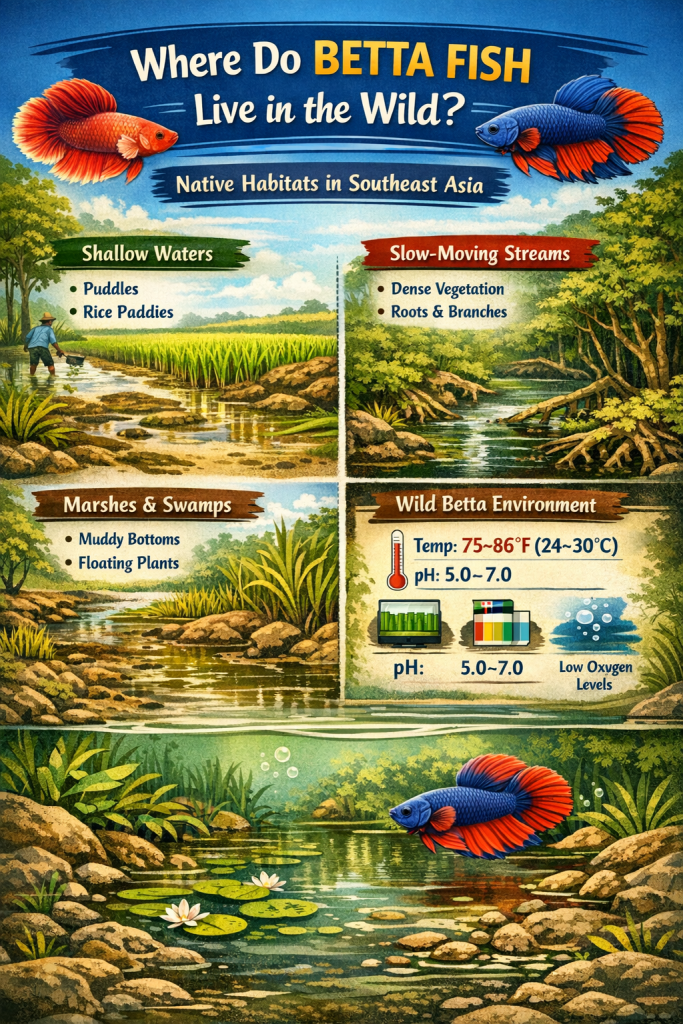
Betta fish live where water is warm, shallow, and slow. You’ll find them in small, quiet waters with lots of plants, hiding spots, and fluctuating levels through the seasons.
| Habitat | Key Features | Notes |
|---|---|---|
| Shallow Waters | Less than 1 foot deep, warm, oxygen near surface | Includes puddles, ditch edges, flooded pond margins; rich in plants and hiding spots |
| Rice Paddies | Temporary ponds during flooding, dense vegetation | Common in Thailand, Vietnam, Cambodia; affected by farming practices and pesticides |
| Slow-Moving Streams | Stable water, submerged roots, branches, marginal plants | Slightly acidic, warm water with tannins; provides shelter and food flow |
| Marshes & Swamps | Dense vegetation, muddy bottoms, floating mats | Low oxygen, rich in insect larvae and worms; seasonal changes affect water levels |
Shallow Water Environments
You’ll often find bettas in waters less than a foot deep. These areas warm quickly and hold lots of dissolved oxygen near the surface, which bettas use along with their labyrinth organ to breathe air.
Shallow waters include puddles, ditch edges, and the flooded margins of ponds. You should expect lots of plant stems, leaf litter, and mud that offer hiding places and breeding sites.
Conditions change fast here. Water can heat during the day and drop at night, and oxygen levels can fall in hot weather. Bettas handle this by resting near the surface and using surface plants as cover.
Rice Paddies
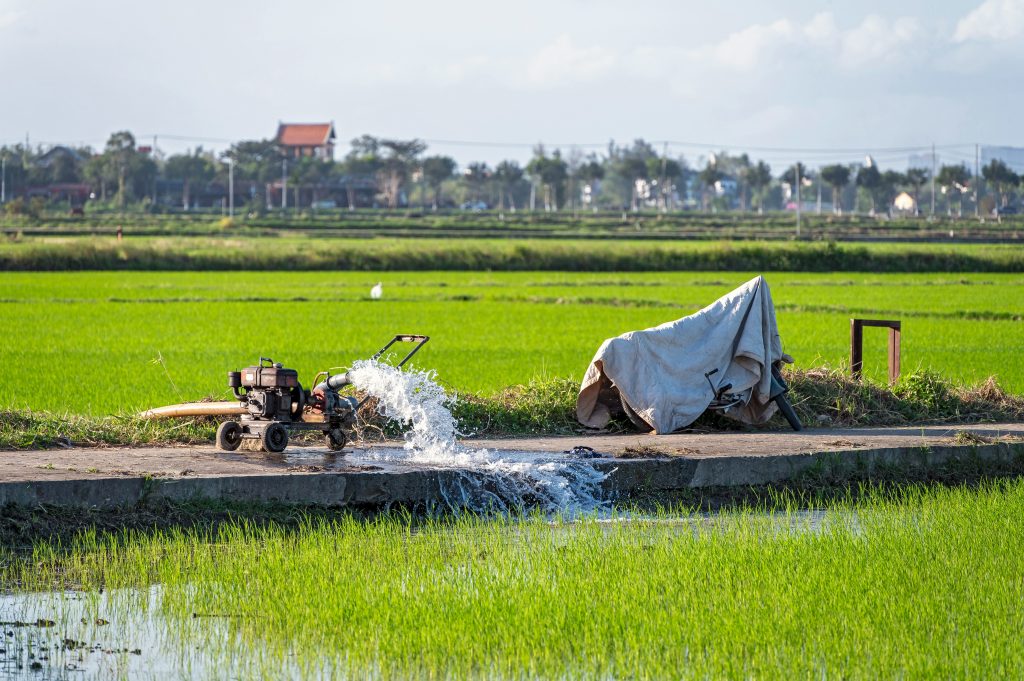
Betta fish in rice paddies. Rice paddies act like temporary ponds when flooded, and they support many wild betta populations. You’ll see bettas in paddies across Thailand, Vietnam, and parts of Cambodia, where water depth and plant cover vary with planting cycles.
Paddies provide dense aquatic plants and shallow water that bettas use for feeding and building bubble nests. You can expect insect larvae, small crustaceans, and detritus as common food sources in these fields.
Human activity affects paddies strongly. Pesticide use and drainage reduce habitat quality, while traditional low-chemical practices help bettas thrive. You should note seasonality: paddies dry or deepen with farming, so bettas move or hide as conditions change.
Slow-Moving Streams
Slow-moving streams give bettas clearer, longer-lasting water than temporary pools. These streams run through forested areas and rice landscapes. You’ll find fewer temperature swings and more stable shelter here.
Look for stretches with submerged roots, fallen branches, and thick marginal plants. Bettas use these features for ambush feeding and protection from predators. Water often flows at a rate that carries food but doesn’t sweep fish away.
Stream water tends to be slightly acidic and warm, usually in the mid-70s to mid-80s Fahrenheit. You’ll also notice leaf litter and tannins that tint the water and provide camouflage for bettas.
Marshes and Swamps
Marshes and swamps offer dense vegetation and soft, muddy bottoms that bettas favor. You’ll find them among reeds, water hyacinths, and floating mats where they can hide and make nests.
These habitats hold decaying plant matter that supports insect and worm populations—the main diet for many wild bettas. Water here can be low in oxygen, so bettas often stay near the surface or inside plant cover.
Marshes and swamps change with rainfall and seasons. Water levels can rise and flood adjacent land, or recede and form isolated pools. You should expect bettas to shift locations within these systems to find shelter and food.
Geographic Range of Wild Betta Fish
Wild bettas live in lowland freshwater areas across parts of mainland Southeast Asia. You will find them in shallow, warm waters where vegetation and slow flow create pockets of shelter and breeding sites.
Native Countries in Southeast Asia
Bettas occur primarily in Thailand, Cambodia, Vietnam, and Laos. Thailand is especially important: Betta splendens originated in the central plains there.
You will also encounter wild bettas in parts of Malaysia and southern Myanmar, though records are more scattered.
Different species have localized ranges; some live only in a single river basin or province.
If you search for wild populations, rice paddies, marshes, and quiet tributaries near villages are common places to find them.
Regional Distribution Patterns
Populations concentrate in lowland floodplains and coastal plains rather than highland streams.
You will see them in rice fields, swamps, and slow-moving backwaters that flood seasonally. These areas provide shallow water and dense plant cover.
Distribution often follows river systems and wetland networks, so bettas can be patchy—common in one watershed and absent nearby.
Human land use, like agriculture and drainage, changes where populations persist. Many local groups survive in fragmented or temporary habitats.
Variations Among Betta Species
More than 70 Betta species exist, and ranges vary from wide to extremely narrow.
Betta splendens has a broader native range in Thailand, but other species live only in single provinces or small river systems.
Morphology and color differ between species and often match local water conditions—duller colors in tannin-stained blackwater, brighter patterns in clearer streams.
When you study a wild betta, note its habitat and exact locality: those details matter for species ID and conservation.
Environmental Conditions and Water Parameters
Wild bettas live in warm, shallow waters with lots of plants and low oxygen. You will see strong links between temperature, acidity, and seasonal water changes that shape where they thrive.
Temperature and Humidity
Bettas come from tropical Southeast Asia, so water temperature normally sits between 75°F and 86°F (24°C–30°C). You should expect air humidity to be high near their habitats because rice paddies and swampy areas hold moisture.
Warm water helps bettas digest food and stay active. Sudden drops below the lower range stress them and slow metabolism, while temperatures above the upper range can lower oxygen and increase disease risk.
Practical tips you can use:
- Target aquarium temperature: 78°F–80°F (26°C–27°C).
- Use a reliable heater and thermometer to avoid swings.
- Keep room humidity moderate if you have many plants; it helps reduce evaporation.
Water pH and Hardness
Wild bettas often live in slightly acidic to neutral water. pH typically ranges from about 6.0 to 7.0, though pockets of softer, more acidic blackwater occur where peat and leaf litter leach tannins. Water hardness is usually low; calcium and magnesium concentrations remain modest in rice paddies and slow streams.
You should check pH and GH (general hardness) regularly if you keep bettas. Aim for:
- pH: 6.0–7.0
- GH: 0–8 dGH (soft water) If your tap water is harder or more alkaline, you can use peat filtration, reverse osmosis, or commercially available buffers to mimic natural soft, slightly acidic conditions.
Seasonal Flooding Effects
Seasonal rains expand habitats into flooded fields, ditches, and shallow pools. Flooding increases water flow and connects isolated pools, letting bettas move and find new food or mates. It also dilutes dissolved minerals and lowers pH in many areas because rainwater is softer and carries organic acids from surrounding plants.
When floodwaters recede, water becomes shallower and warmer with higher plant cover, creating pockets with low oxygen. Bettas cope using their labyrinth organ, but you should note that sudden changes in water level, clarity, or chemistry can stress them. If you keep bettas, mimic gentle seasonal shifts—slow water changes and gradual adjustments—rather than abrupt parameter swings.
Adaptations for Survival in the Wild
You will learn how bettas breathe in low-oxygen water, what they eat, and how they defend space and mates in shallow wetlands. These traits let them live in rice paddies, slow streams, and small pools where other fish struggle.
Labyrinth Organ Function
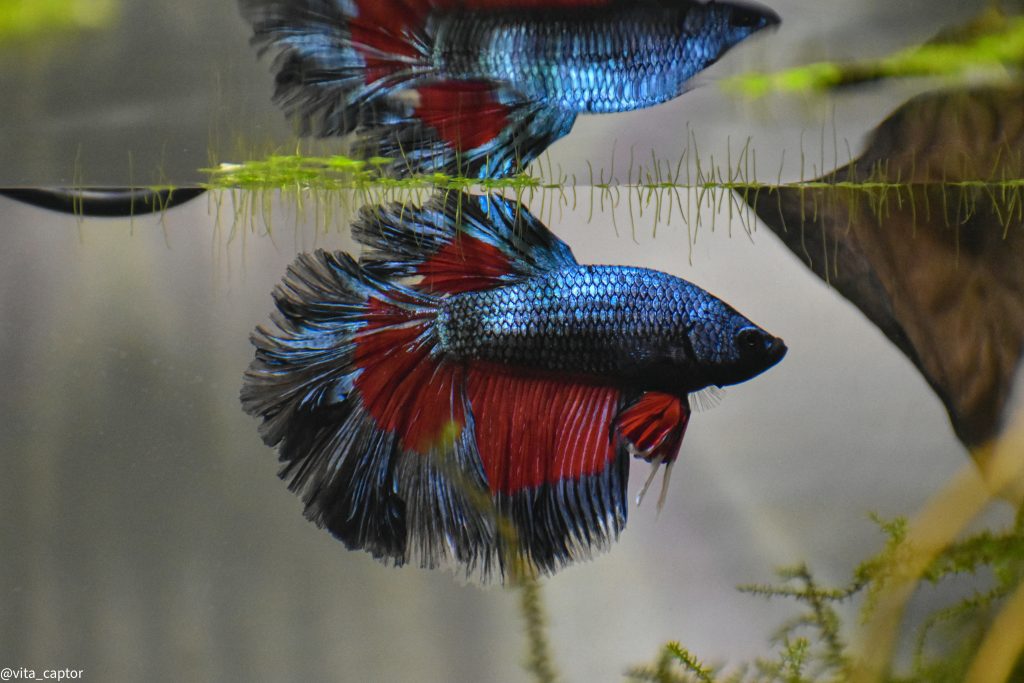
Bettas have a labyrinth organ that lets them breathe air from the surface. This organ sits above the gills and contains folded tissue that absorbs oxygen directly into the bloodstream. You will see them surface every few minutes in low-oxygen habitats.
This adaptation means bettas can live in shallow, warm water with little dissolved oxygen. It also lets them survive in water that warms or becomes stagnant during droughts. You should provide access to the surface if you keep one in captivity so it can use the organ freely.
Diet and Feeding Habits
Wild bettas eat a mix of live foods you can recognize: insect larvae, small crustaceans, and tiny freshwater invertebrates. They hunt near the water surface and among plants, using quick darts to capture prey. Juveniles feed on microscopic organisms until they grow big enough to tackle larger prey.
You should know they are opportunistic feeders. They won’t ignore available food, but they prefer moving prey. In nature, they balance insects with occasional plant matter or detritus, which helps them survive when insect supply drops.
Territorial Behavior
Male bettas defend small territories that include a shelter and a surface-breathing spot. You will notice aggressive displays like flaring fins and gill covers to warn rivals away. These behaviors reduce repeated fights by settling dominance quickly.
Females may hold smaller territories or share space near feeding sites, depending on food and cover. Territory size changes with resource density: tight spaces in rice paddies lead to closer, more frequent confrontations than in larger streams.
Learn more how long betta fish live here.